
Some special features while worshiping (puja) of Lord Shiva


(Based on pages 61 and 62 of the book ‘Shastra Ase Sangate’. A critical review by the compilers.)
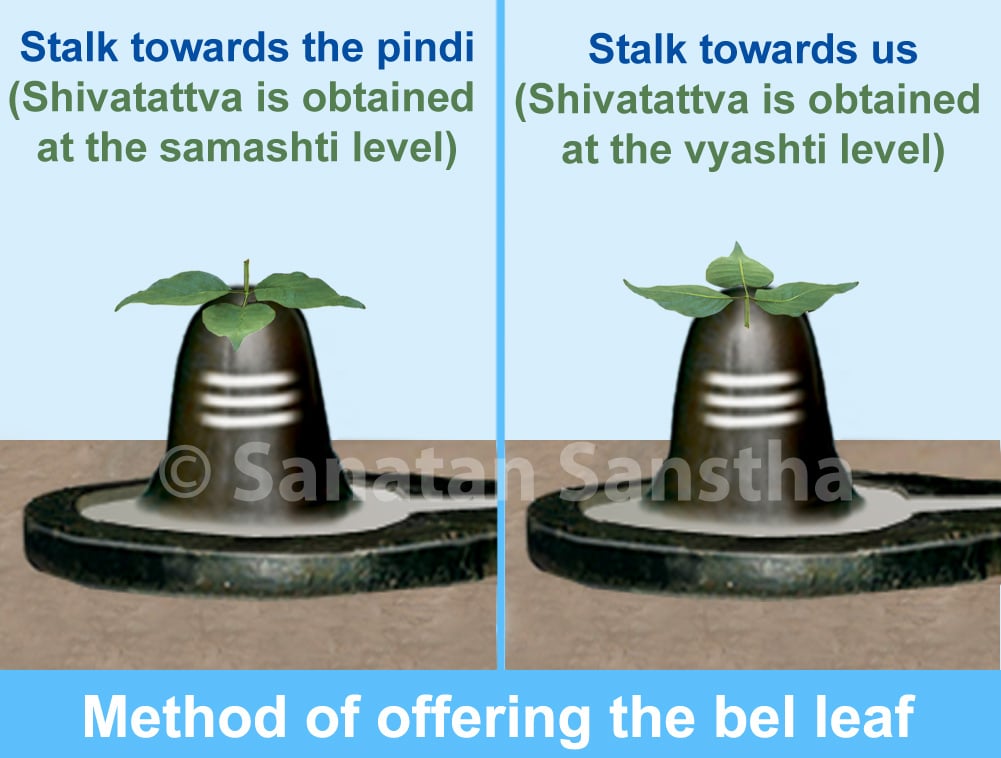
Tarak_Marak_Bel_Vahane_New
  • A. ‘In the ritualistic worship of Lord Shiva neither is the conch worshipped nor is its water used to bathe Lord Shiva. If a banalinga is a part of the five fold family of deities (panchayatan) then one may sprinkle the banalinga with water from the conch. However a banalinga with a pindi (divine phallus) of Lord Mahadev should not be bathed with this water. Since the feminine principle in the form of the shalunka (base of the linga) is present in the pindi, there is no need to sprinkle water from the conch which also has a feminine principle. A banalinga however does not possess a shalunka; hence it is bathed with water from a conch. During ritualistic worship of Mahadev in a temple, worship of the conch (shankhapuja) is not performed. Blowing of the conch before the ritual of waving lit lamps (arti) is allowed and is normally done during the arti. The sound of a conch not only brings about pranayam but also alleviates distress caused by spirits, black magic, etc. in the vicinity where it is heard.
  • B. Tulsi (basil) leaves are not offered to Lord Shiva. However tulsi leaves offered to a shaligram or an idol of Lord Vishnu may be offered as Shiva is a devotee of Vishnu and He loves tulsi offered to Lord Vishnu.
  • C. It is said that on the eighth day (ashtami) of the dark fortnight of the Hindu lunar month of Jyeshtha, Lord Shankar and on the fourteenth day (chaturdashi), Revati is ritualistically worshipped with blue flowers. On that day blue colour has the ability to absorb the Shiva principle as much as the green bel leaves. Based on the same principle kevada (a type of fragrant flower) is offered to Shiva during the ritual of conclusion (udyapan) of the vowed religious observance of Mahashivaratri.
  • D. Bel leaves, white flowers and holy sacrament of food (naivedya) offered to a pindi of Lord Shiva are not accepted as they can induce detachment which an average individual does not desire.
  • E. People belonging to various sects such as Shaiva, Kapalik, Gosavi, Virashaiva, etc. use various lingas – earthen (parthivlinga), lingas in a silver box donned around the neck (kanthasthalinga), lingas of crystal glass (sphatiklinga), banalingas, a five stringed linga (panchasutri), stone lingas (pashanlinga), etc.

Comments

Popular posts from this blog

Building Self-Confidence...

What is Self-Confidence? Two main things contribute to self-confidence: self-efficacy and self-esteem. We gain a sense of  self-efficacy  when we see ourselves (and others similar to ourselves) mastering skills and achieving goals that matter in those skill areas. This is the confidence that, if we learn and work hard in a particular area, we'll succeed; and it's this type of confidence that leads people to accept difficult challenges, and persist in the face of setbacks. Building Self-Confidence So how do you build this sense of balanced self-confidence, founded on a firm appreciation of reality? The bad news is that there’s no quick fix, or five-minute solution. The good news is that becoming more confident is readily achievable, just as long as you have the focus and determination to carry things through. And what’s even better is that the things you’ll do to build your self-confidence will also build success – after all, your confidence will come fr...

NGO Project Proposal (training programme on computer)

Project Proposal for Scheme for Grant-in-Aid to voluntary organisation working for other Backward                     Classes (training programme on computer) II. BACKGROUND OF THE ORGANISATION VOICE OF WOMEN WELFARE TRUST  is a voluntary, non-profit organisation working for the development and empowerment of the rural and urban poor and needy children and women. The target areas and groups VOICE OF WOMEN WELFARE TRUST  is now effective in ROPAR District of Punjab, India.   The key target groups are women, children, BPL, Dalits (the so called untouchables or lowest caste group), children, child labourers, disadvantaged youth, rural women and unorganized rural labourers. Organization’s activities Blood Donation( more than 2000 thousand units every year) Free Medical check-up camps.(12 camps every year).       ...

WHAT IS SHYNESS AND WHY SOME PEOPLE SHY (VIDEOS INCLUDED)

What Is Shyness? Shyness is an emotion that affects how a person feels and behaves around others. Shyness can mean feeling uncomfortable, self-conscious, nervous, bashful, timid, or insecure. People who feel shy sometimes notice physical sensations like blushing or feeling speechless, shaky, or breathless. Shyness is the opposite of being at ease with yourself around others. When people feel shy, they might hesitate to say or do something because they're feeling unsure of themselves and they're not ready to be noticed. Reacting to New Things New and unfamiliar situations can bring out shy feelings — like the first day of school, meeting someone new, or speaking in front of a group for the first time. People are more likely to feel shy when they're not sure how to act, what will happen, how others will react, or when all eyes are on them. People are less likely to feel shy in situations where they know what to expect, feel sure of what to do or say, or are among ...